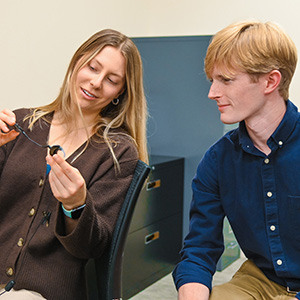
Cochlear implants & personalized hearing
Cochlear implants provide access to sound by electrically stimulating the auditory nerve, but outcomes vary substantially across listeners. We study how spectral resolution, channel interaction, the electrode-neuron interface, and auditory processing contribute to this variability.
Our goal is to develop efficient measures of channel functionality and perceptual capacity that can inform personalized programming and rehabilitation.
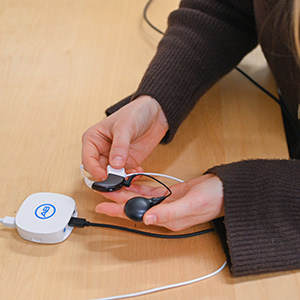
Psychophysics + signal processing + speech perception
Our work combines psychophysical tuning curves, spectral-resolution tasks, phoneme and word recognition, sentence recognition in noise, signal-processing analyses, and device-based measurements.
Speech in noise & auditory cognition
Understanding speech in a quiet clinic is not the same as understanding speech in a restaurant, meeting, classroom, or family gathering. We investigate why listeners differ in their ability to recognize speech in challenging acoustic environments and how auditory fidelity interacts with attention, working memory, processing speed, and listening effort.
Hearing loss, cognition & dementia
Age-related hearing loss is associated with poorer cognitive outcomes, but the mechanisms linking hearing and cognitive decline are complex. We study auditory, psychosocial, and neurocognitive pathways that may connect hearing loss and speech-in-noise difficulty with brain aging, social engagement, cognitive decline, and dementia risk.
We use behavioral hearing measures together with cognitive testing and structural and functional neuroimaging to understand which pathways are most important—and which may be modifiable through hearing intervention.
Auditory neuroscience & neuroimaging
We use functional near-infrared spectroscopy (fNIRS), MRI, diffusion imaging, EEG, behavioral methods, and computational tools to investigate how the brain processes degraded, effortful, and electrically delivered auditory information.
These approaches allow us to connect peripheral auditory function with cortical processing and real-world communication outcomes.
Additional research foundations
Early linguistic environments and pediatric cochlear implants
The lab has studied how the quantity and quality of early language input shape spoken-language development in children with cochlear implants, including naturalistic recordings of caregiver-child communication.
Speech production and auditory-motor control
We have also investigated how altered auditory input affects vocal control and speech production, using behavioral and neurophysiological approaches to study auditory-motor integration.